01Food / Seasonal Edition

Seasonal Menu
/ Signature Dishes

Savory Gallery’s seasonal menu is a changing expression of food within the dining room. This edition introduces that direction through a series of signature dish studies: close readings of plate, surface, proportion and mood. It is an editorial way into the kitchen’s current character, rather than a fixed printed list. The selection may evolve with the season, while the studies below offer a clear sense of how food is considered here.

Make an enquiry

02 Food as a seasonal study

A living selection, read in the room.

The seasonal menu is best read as a living selection rather than a static list. Its shape can shift as the season changes, and each visit is an opportunity to encounter a particular arrangement of food, table and attention. The purpose of this page is to make that direction legible before a table enquiry.

A / 01

Seasonal movement

Seasonality gives the menu its changing framework. Instead of treating the page as a permanent inventory, read it as a record of present direction: a selection shaped to remain open to revision, contrast and renewed emphasis as the season moves on.
B / 02

Signature focus

Signature dishes are recurring points of attention within Savory Gallery’s food story. They make certain visual and sensory ideas easier to recognise across the page, while leaving room for the wider seasonal selection to change around them.

C / 03

Room for change

This edition communicates character rather than a daily guarantee. If you are planning a visit and would like to ask about the current seasonal direction, use the table enquiry page to begin that conversation.

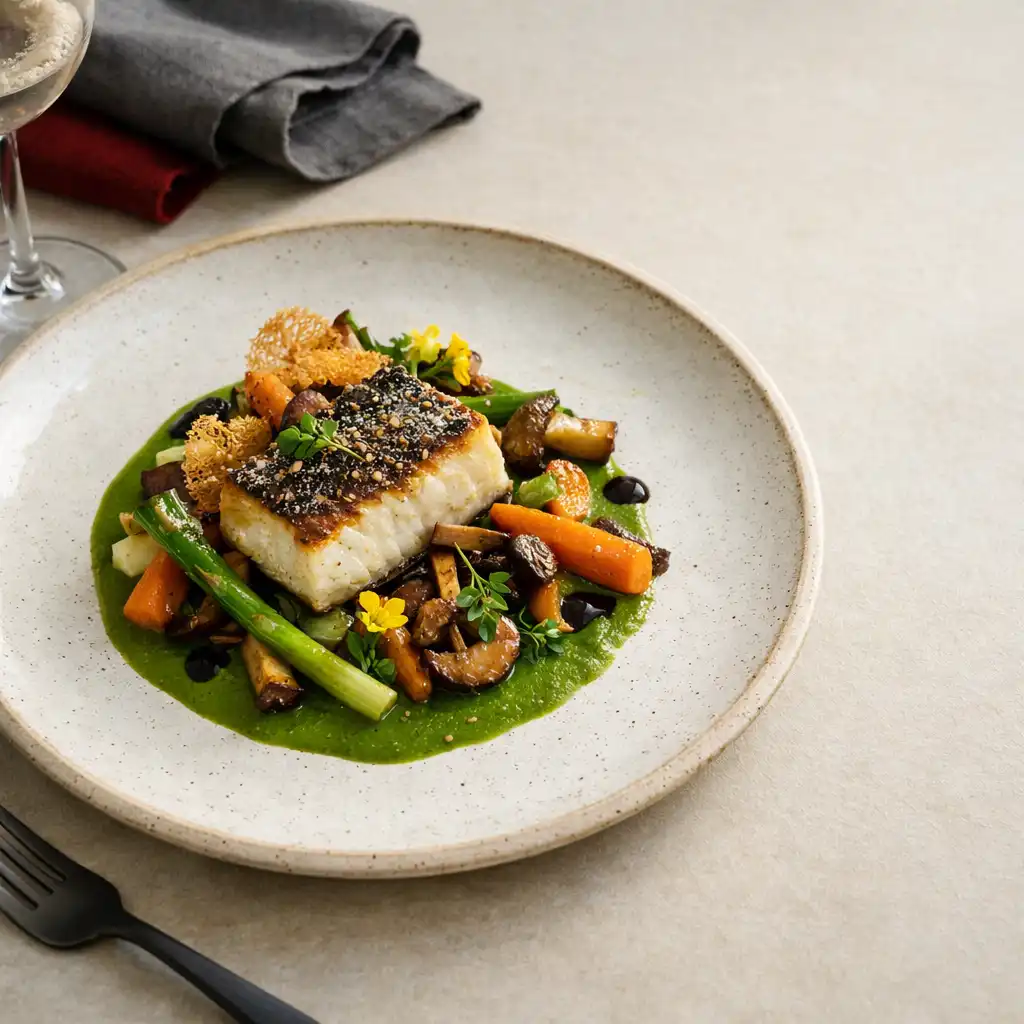
Close editorial view of a refined plated seasonal dish on a pale table surface.
IMG 01Crop / Centre-leftPlate, texture and ceramic edge in close seasonal study.

01

Plate study / close detail

Here, a signature dish is read through proportion before it is read as a list of components. The plate holds texture beside smoother surfaces, quieter areas beside a concentrated point of colour, and a measured relationship between food and ceramic. That restraint gives the image room to register: an edge, a gloss, a soft transition, a deliberate interval of table. Within a seasonal menu, such details can change while the underlying attention to balance remains recognisable. The study asks visitors to notice composition as part of the meal’s character.

Each plate study is an editorial view of the kitchen, not a promise of daily availability. For a planned visit, you can make a table enquiry about the current seasonal selection.

03 / Signature index

Four ways of reading a plate

01

Composition

Each signature dish can be considered as an arrangement of elements, scale and negative space. Food remains the subject, yet the plate also becomes a field: a place where edges, intervals and visual weight make the dining experience easier to read.

02

Season

Season is the condition that keeps the menu open to revision. It allows a familiar direction to be revisited without fixing the selection in place, so the page can show a continuing food story rather than a permanent catalogue.

03

Contrast

Contrast appears through temperature, texture, colour and pacing. A signature dish can hold these differences in a composed relationship, giving visitors a practical sense of the menu’s visual rhythm without claiming a specific preparation or plate.

04

Return

Signature dishes are points visitors can recognise across this edition, even as the seasonal selection shifts. For questions about what may suit an intended visit, continue to the table enquiry page for the current conversation.

04 Plate study

A complete plate, held in balance

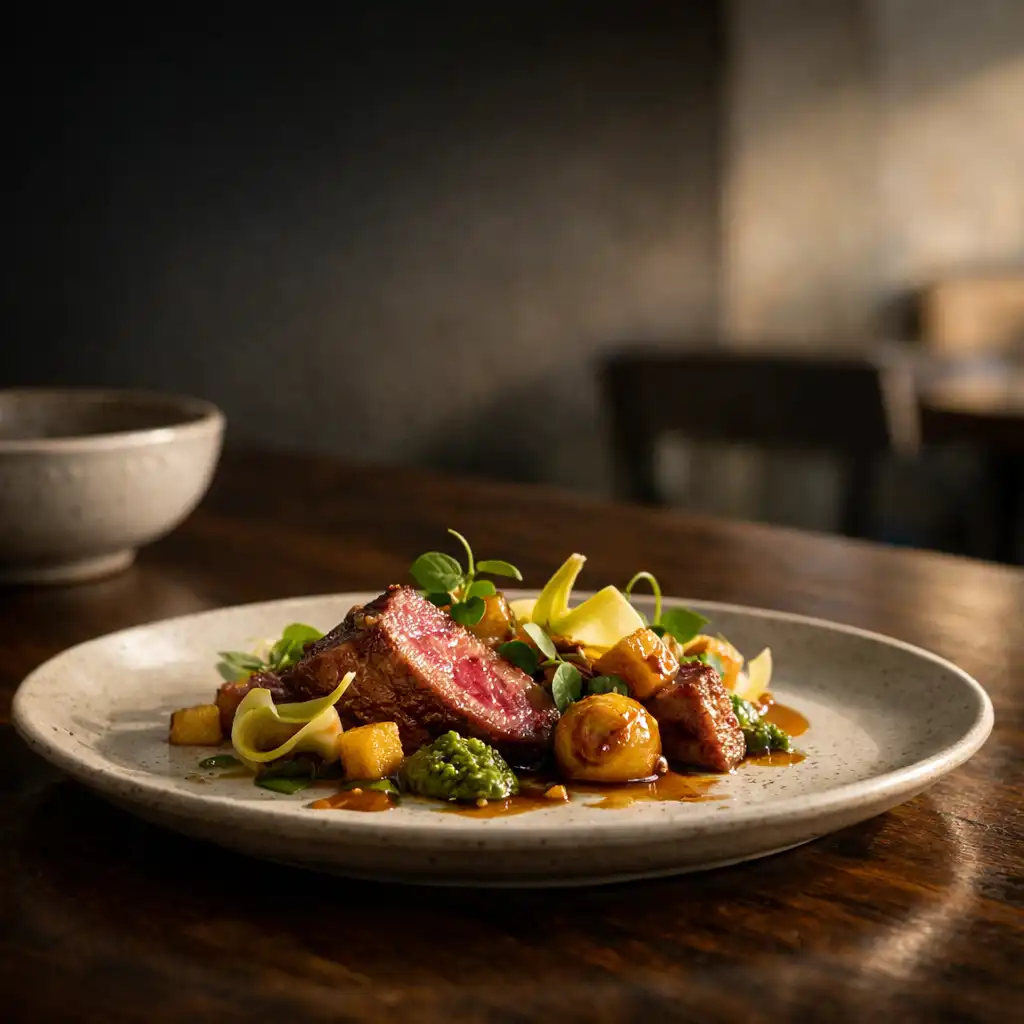
The second study moves outward from detail to the relationship between a plate and its setting. Balance is carried by colour, scale and the space left around the food, so the table surface becomes part of the composition rather than background scenery. The image suggests a complete moment without turning it into a fixed formula. A signature dish may be recognised through this restraint: visual density is given room to settle, while seasonal revision keeps the selection responsive and open. What remains is an approach to plating that feels composed, clear and attentive.

Composed seasonal plate on a dark timber dining table with quiet room geometry behind it.
IMG 02Crop / Lower centrePlating and table geometry held in one broad frame.The current selection can change. Make a table enquiry for an intended visit.

06 A meal in four movements

A sequence of changing impressions.

A seasonal menu can be experienced as a sequence of changing impressions rather than an exhaustive category list. These four movements are an interpretive guide to attention, pacing and recall within a dining occasion. They do not describe a required order; they offer another way to understand how food may gather meaning across the table.

01

Arrival

An opening impression can establish attention through contrast and pace. It is the point at which the table comes into focus: a first visual cue, an initial texture, and a sense that the meal is beginning to make its own rhythm.

02

Build

As the occasion develops, flavour, texture and visual density can gather without requiring a prescribed order. The seasonal menu is understood through this accumulation of impressions, with each plate contributing to a larger, composed field.

03

Pause

A pause introduces contrast and reset into the dining rhythm. It gives the table a moment of space, allowing the seasonal direction to feel measured rather than continuous, and making subsequent details easier to notice.

04

Recall

A signature dish can leave a recognisable final impression while the seasonal selection continues to shift. For questions about the current food direction in relation to a visit, use the table enquiry page.

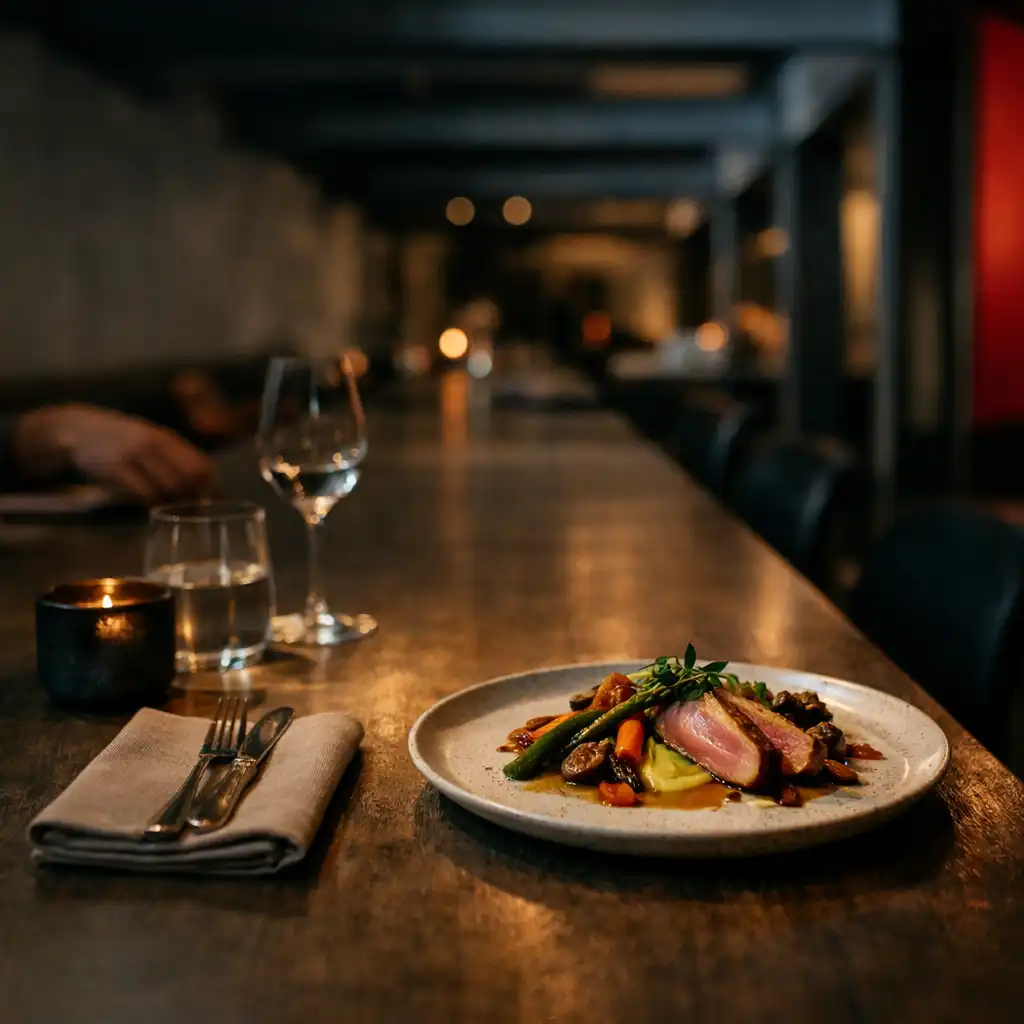
Wide dining-table scene with a refined seasonal plate near the right edge, glassware and table materials in view.
IMG 03Crop / Table edge, rightPlate, table and ambient setting in a wide seasonal frame.

07

Food in the wider table composition

The final study places a signature dish within a larger table composition. Material surface, folded linen, glassware and the room’s quieter geometry frame the plate without competing with it. Food remains the focus, but the setting changes how that focus is felt: gathering, spacing and the shared field of the table become visible parts of the occasion. This wider view connects the seasonal menu to Savory Gallery as a dining space, where a plate is encountered not in isolation but through the pace and atmosphere around it.

These studies express the seasonal menu’s visual direction rather than a confirmed current selection. If the page has prompted an intended visit, make a table enquiry to continue.

08 Current menu, current conversation

Ask about the season in relation to your visit.

Seasonal offerings can evolve, so this page is designed as an introduction to Savory Gallery’s food direction rather than a fixed menu record. If you are considering a table, an enquiry is the appropriate place to ask about the current seasonal selection in relation to your intended visit. It keeps the conversation practical while preserving the page’s role as an editorial guide to signature dishes and their visual language.

What to ask

Use a table enquiry to frame a question about the current seasonal selection and your intended visit. The page does not assume a particular menu, plate or arrangement will remain unchanged when you arrive.

Make a table enquiry

This is an enquiry route, not a booking confirmation.

09 / Reading notes

Seasonal menu reading notes

10

Take the seasonal menu toward your next table.

Continue to the dedicated enquiry page to begin a conversation about an intended visit.

Make a table enquiry